

HOME>Experiments>For Kitchen>EH016 Ammonia–Soda Process
Let’s make baking soda using salt, ammonia, and carbon dioxide. Normally, carbon dioxide is obtained by heating limestone, but in this case, we’ll simply blow into the solution to introduce carbon dioxide.
Gaseous ammonia can cause irritation and pain if it comes into contact with the eyes or mucous membranes. Be sure to perform the experiment in a well-ventilated area at all times.
Requires
equipments
・empty plastic bottle
・aquarium tubing
・coffee filter
reagents
・10 w/v % aqueous ammonia solution
・table salt
・distilled water
Methods
1.
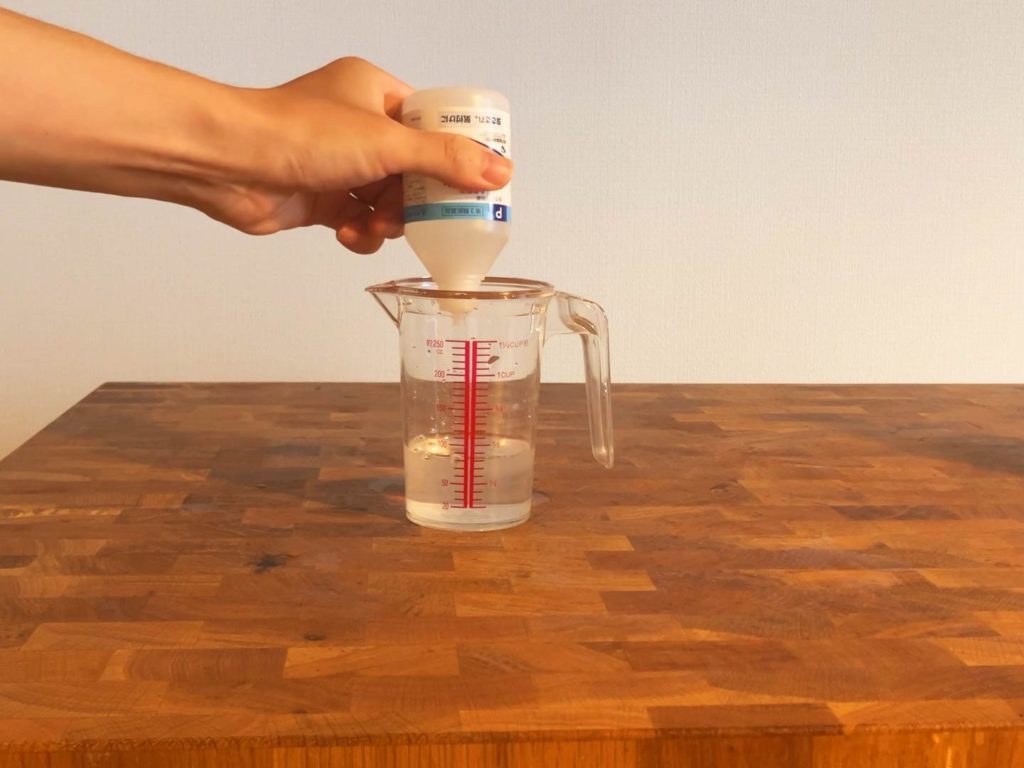
In a measuring cup, combine 160 mL of saturated saline solution (made by dissolving salt in purified water) with 40 mL of ammonia water.
2.
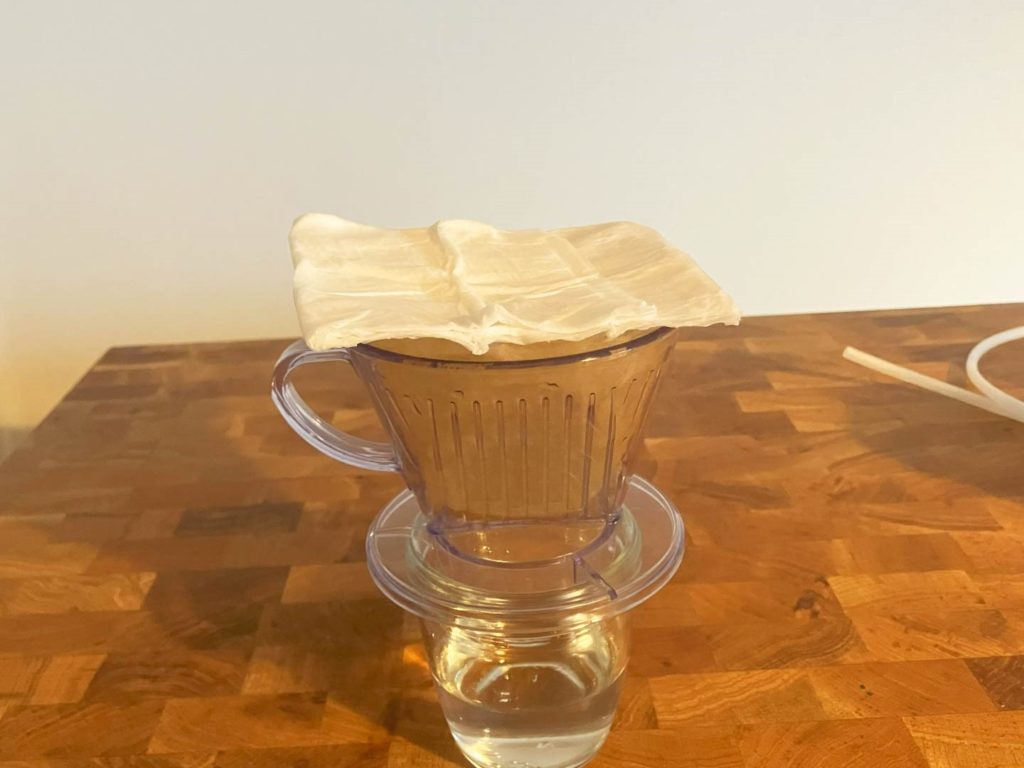
If the liquid appears cloudy, filter it using a coffee filter. While filtering, cover the container with a damp paper towel to prevent evaporation or contamination.
3.
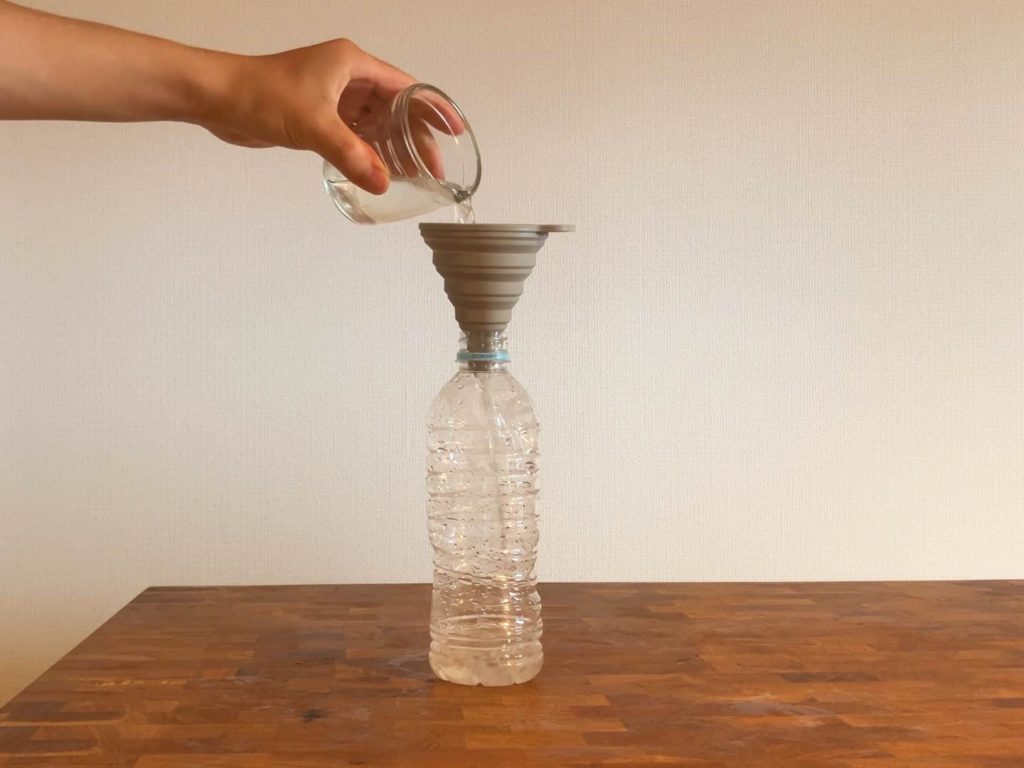
Once filtration is complete, transfer the liquid into a plastic bottle.
4.

Cut an aquarium tube to a length of at least 1 meter.
*To prevent accidental ingestion from suction, do not cut the tube shorter than this length.
5.

Insert the tube into the plastic bottle, ensuring that the opening of the tube reaches the bottom of the bottle. Gently stuff a damp paper towel into the opening of the bottle.
6.
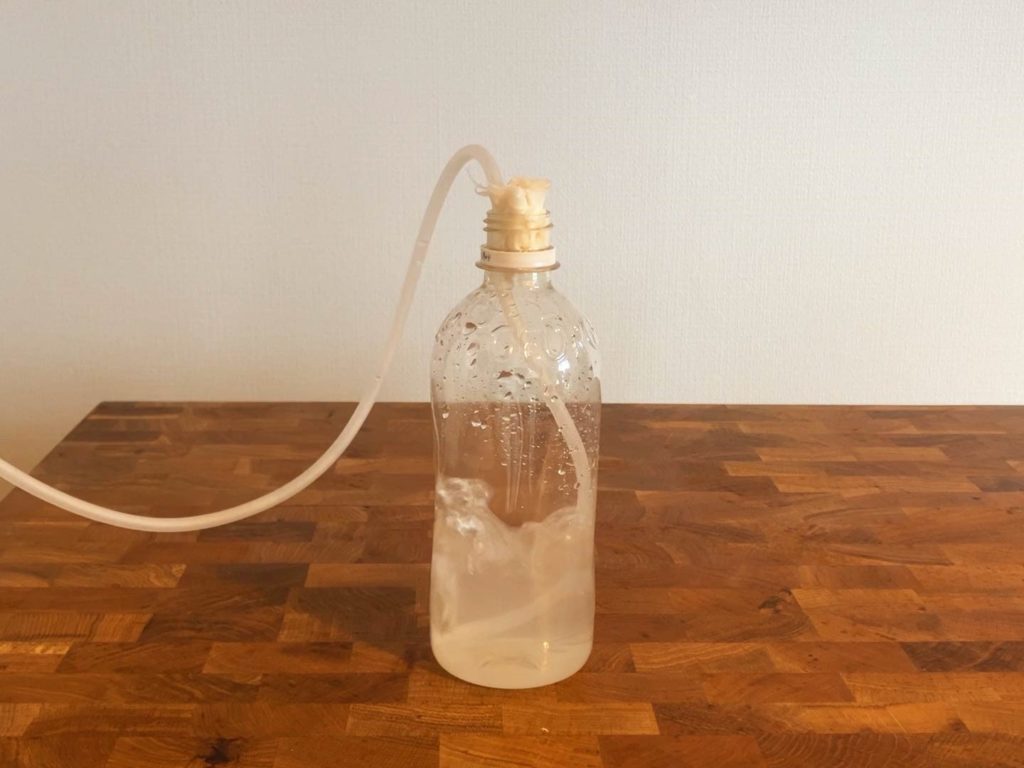
Blow into the tube for a while (it will take more than 30 minutes) to introduce carbon dioxide and allow it to react with the solution.
*To prevent ammonia gas from accumulating, use a fan or ensure good ventilation while performing the experiment.
7.
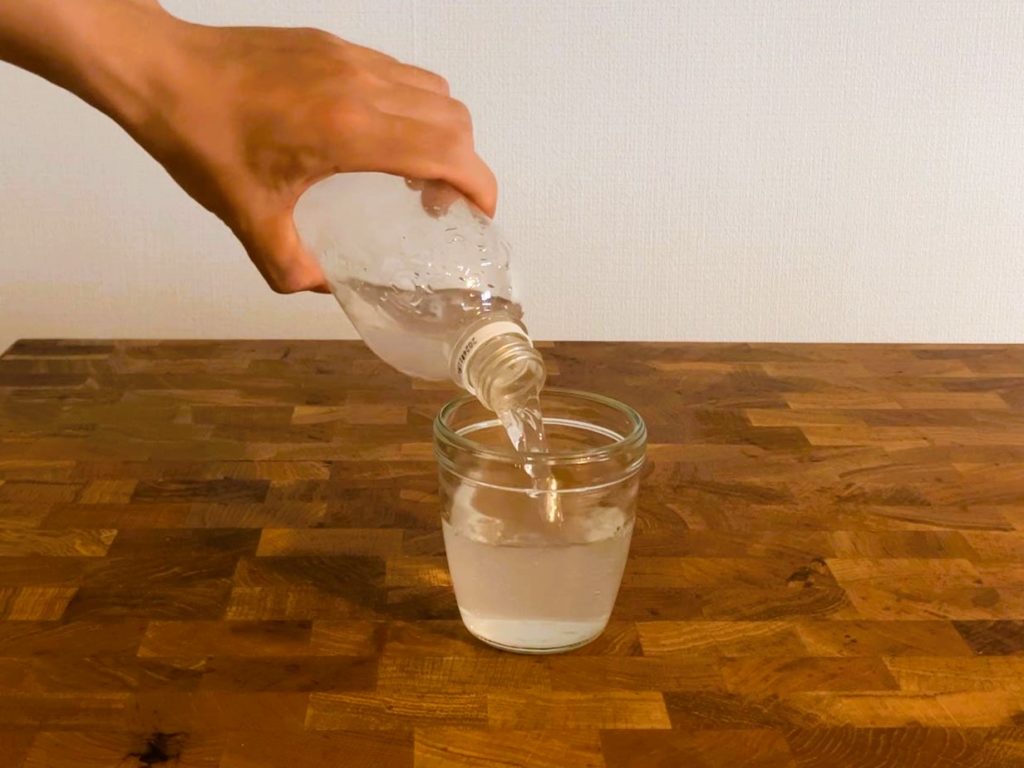
Once the solution has turned sufficiently cloudy, stop blowing into the tube and transfer the solution to a suitable container.
8.

After waiting for a while, the white precipitate will settle at the bottom. Discard the clear water from the top.
9.
Add a small amount of purified water, mix well, and then leave it to sit for a while. Once the precipitate settles at the bottom, discard the liquid. To dry the remaining precipitate, leave it as is overnight.
10.

Collect the dried precipitate using a spoon or similar tool. Investigate the properties of baking soda and check if the precipitate is indeed baking soda.
Clearing
Dispose of all the liquids used in the experiment by pouring them into a bowl filled with water, diluting them, and then pouring them down the drain.
If ammonia remains on the coffee filter after filtration, it may attract insects. Soak it in water for a while, then squeeze it out and dispose of it.
Principle
The ammonia soda process (Solvay process) is a method for producing sodium carbonate, developed in the 1960s. Sodium carbonate is used in various applications, including laundry and glass manufacturing.
The process of obtaining sodium carbonate using the ammonia soda method involves several reactions. First, limestone is heated to produce carbon dioxide
CaCO3 ➞ CaO + CO2
Next, salt, carbon dioxide, and ammonia are dissolved in water and react to form sodium bicarbonate (baking soda), as shown in the following reaction
NaCl + CO2 + NH3 + H2O ➞ NaHCO3 + NH4Cl
Finally, when sodium bicarbonate (baking soda) is heated, it undergoes thermal decomposition to form sodium carbonate (soda ash), carbon dioxide, and water, as shown in the following reaction
2NaHCO3 ➞ Na2CO3 + H2O + CO2
By using the by-products calcium oxide (CaO) and ammonium chloride (NH₄Cl), ammonia can be recovered through the following reaction
CaO + H2O ➞ Ca(OH)2
Ca(OH)2 + 2NH4Cl ➞ NH3 + CaCl2 + 2H2O
In this reaction, calcium oxide reacts with ammonium chloride to produce calcium chloride (CaCl₂), ammonia (NH₃), and water. The ammonia gas can be collected and reused in the production of sodium carbonate, making the process more eco-friendly by recycling the ammonia.