
HOME>Experiments>For Kitchen>EH010 Surface Tension Meter
The surface tension of water weakens when a surfactant like soap is dissolved in it. How much does it change? Let’s measure the surface tension to find out!
Requires
equipments
・wire net
・stand for wire net
・steel cans with flat lids
・hook with strong magnet
・rubber band
・bobbin case
・sewing thread
・bowl
・30cm ruler with a hole in the end
reagents
・dish soap
Methods
1.

Attach a rubber band to a hook and fit a bobbin case onto it. Create three such sets, ensuring that the positions of the rubber bands are aligned.
2.
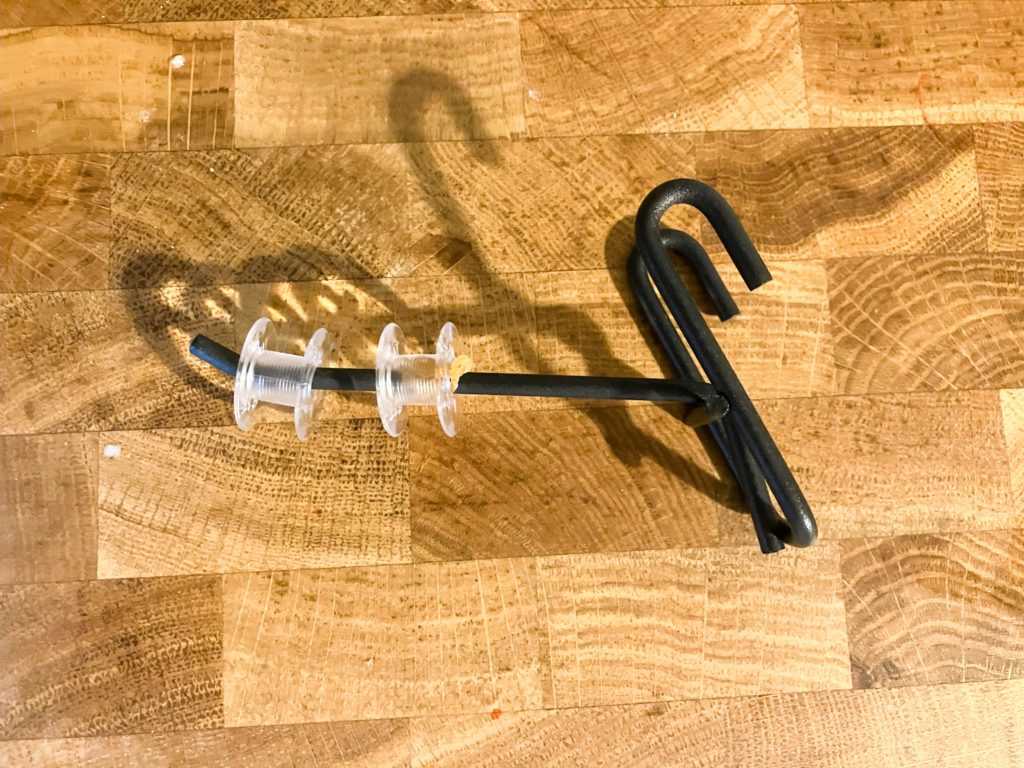
Attach an additional bobbin case to each setup. These will function as pulleys.
3.
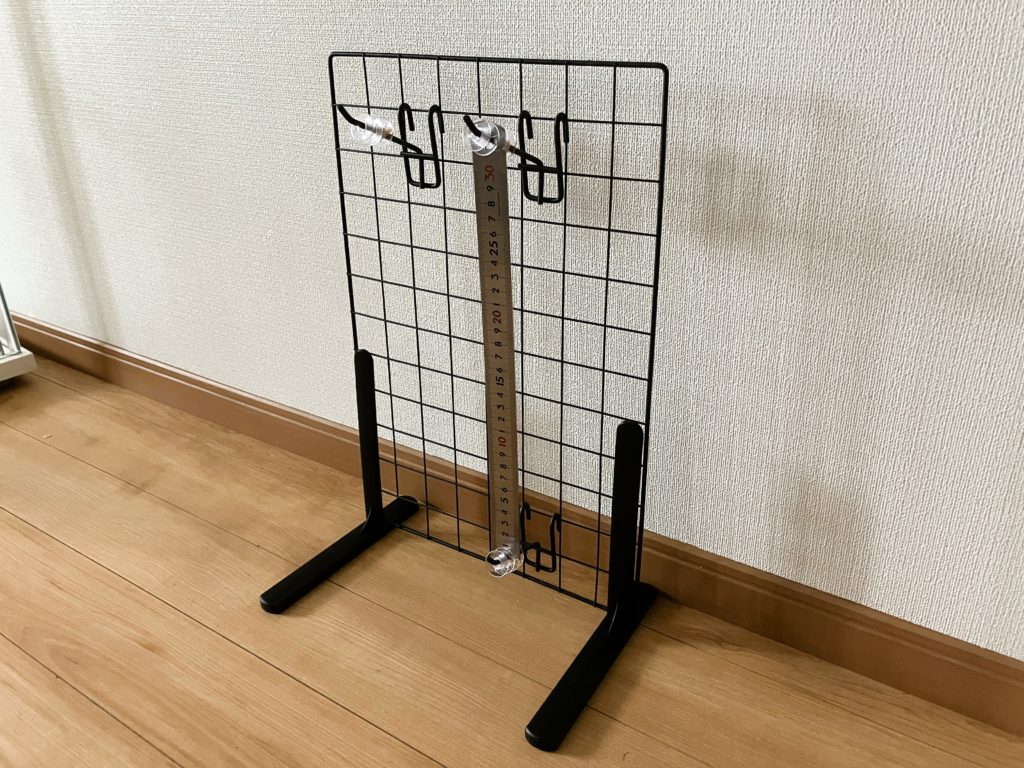
Attach the hooks to a mesh or grid as shown in the photo, ensuring they are secured in place using string or zip ties. Position the ruler so that it aligns between the bobbin cases of the right-hand hook.
4.
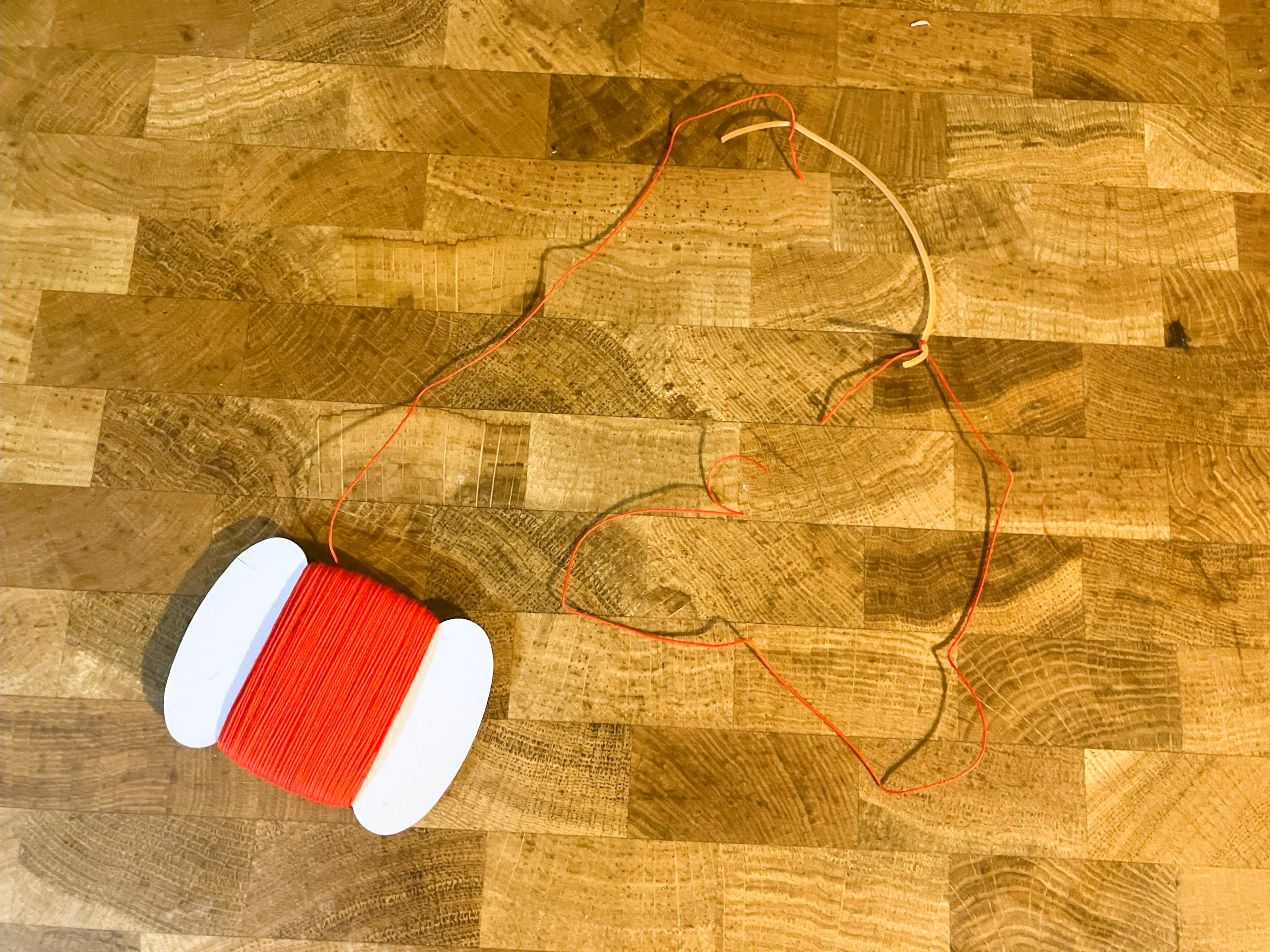
Cut two pieces of sewing thread to an appropriate length. Tie both ends of each thread to the rubber bands, which have been cut to form a string-like shape.
5.
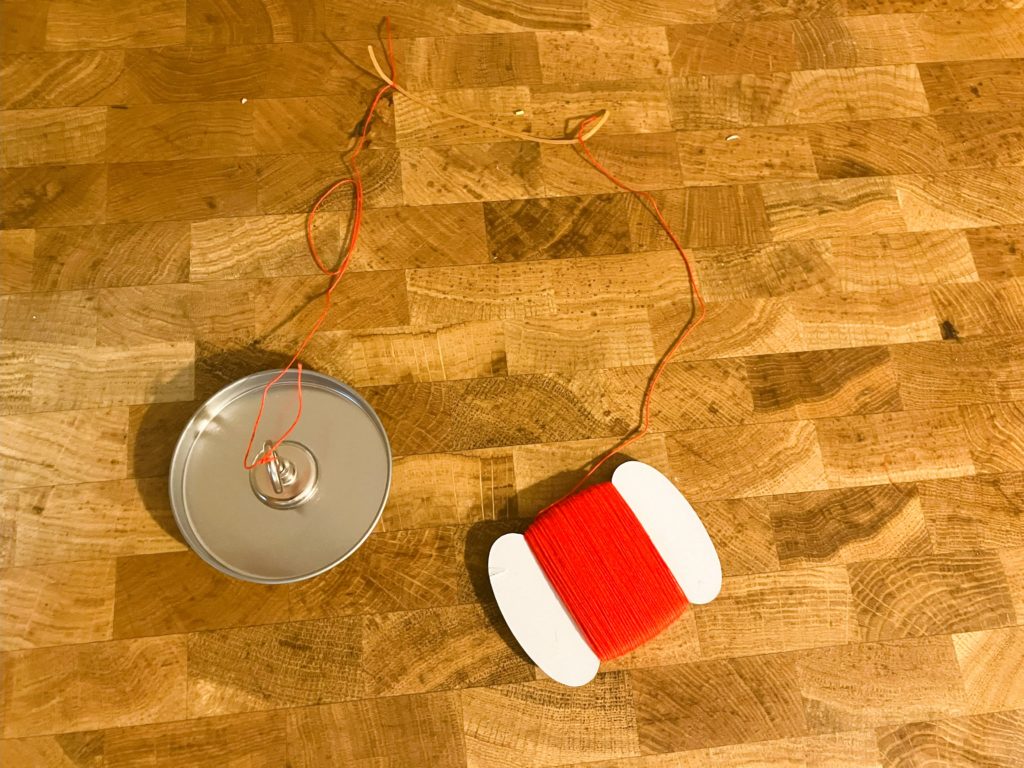
Turn the can lid upside down and attach a magnetic hook to the center of the lid. Then tie the hook securely with a piece of thread.
6.
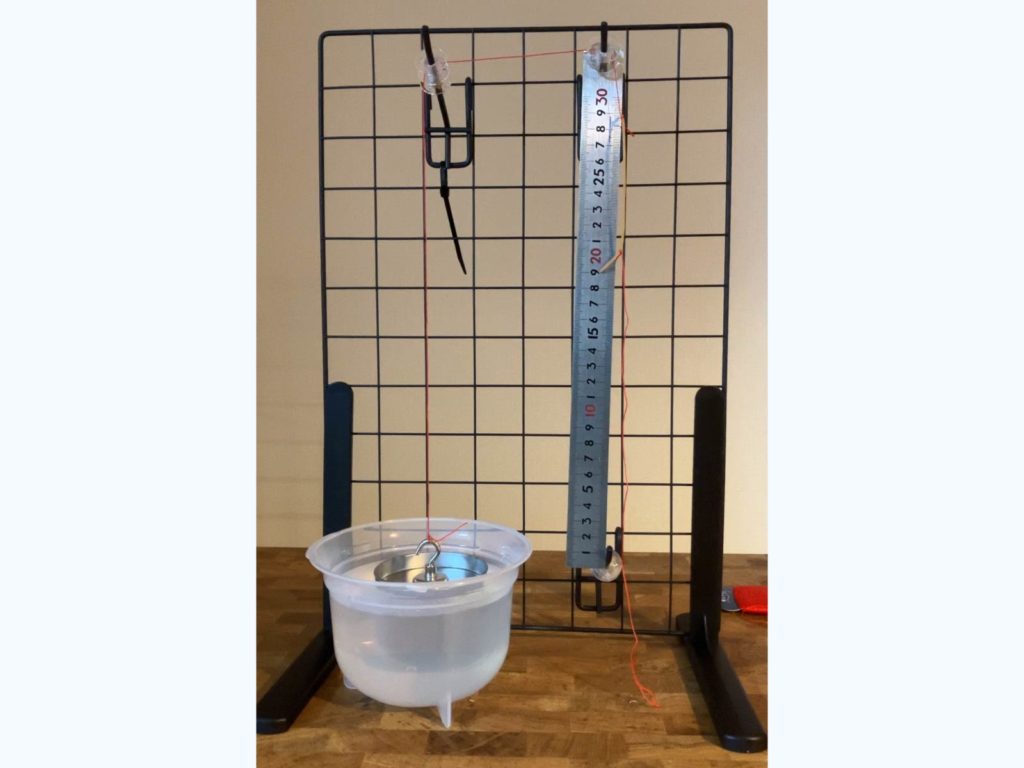
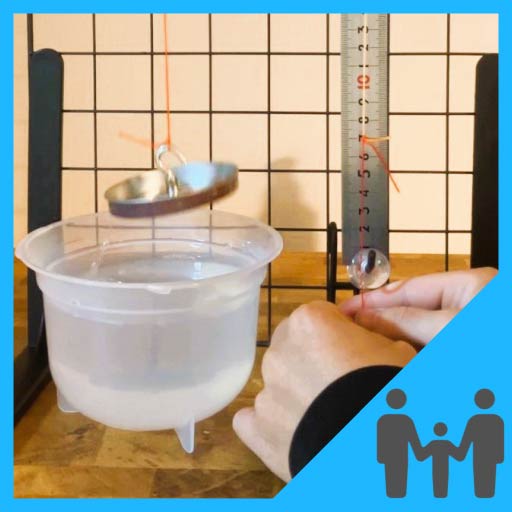
Float the lid with the attached hook on a bowl of water and position it as shown in the photo. Adjust the length of the thread on the magnetic hook side so that, when the thread is gently taut, the upper end of the rubber band aligns with the top part of the ruler.
7.
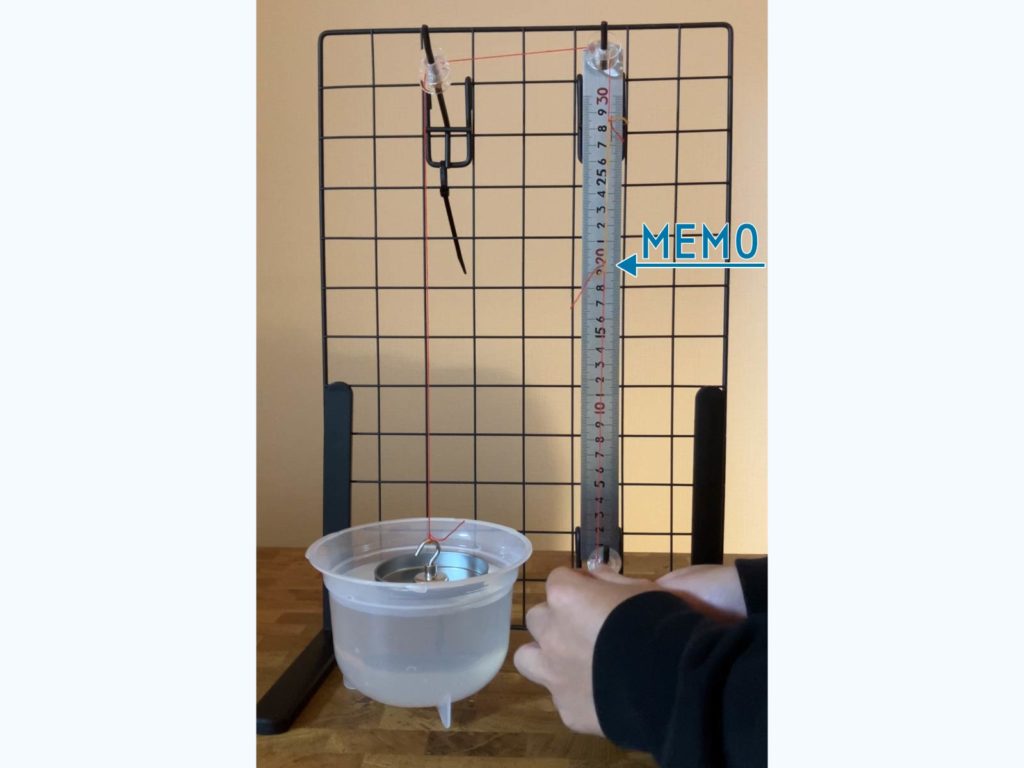
Ensure that the lid floating on the water remains stationary and that the threads are vertical. Record the measurement at the knot on the lower side of the rubber band against the ruler. Then, slowly and steadily pull the thread downward.
8.
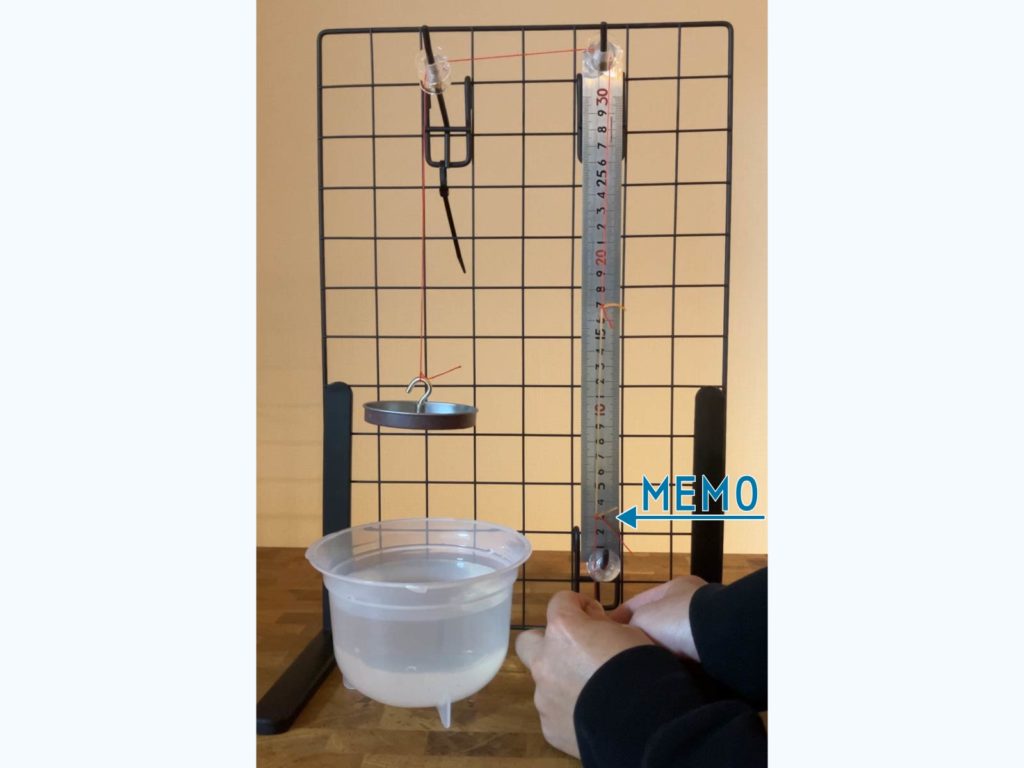
Stop pulling the thread the moment the lid lifts off the water surface. Record the measurement at the knot on the lower side of the rubber band against the ruler at that instant.
9.

Subtract the value recorded in step ⑦ from the value recorded in step ⑧ to calculate how much the rubber band stretched. The greater the stretch of the rubber band, the higher the surface tension of the liquid.
Principle
The molecules that make up a substance are attracted to each other. Inside the substance, the molecules are balanced in all directions and remain stable due to these mutual attractions. However, molecules on the surface of the substance experience unequal pulling forces and are drawn inward, as seen in liquids like water and mercury. The stronger the pulling force, the smaller the surface area becomes, causing the liquid to take on a rounded shape. This property, where the surface area decreases, is called surface tension.
In this experiment, we created a device that quantifies the strength of surface tension by measuring the stretching length of a rubber band. When the lid of the can touches the liquid surface, the water molecules in contact with both the lid and the surface are strongly attracted to each other. This results in a longer stretch of the rubber band. However, when detergent is added to the water, it weakens the surface tension, causing the rubber band to stretch less. This is because the soap reduces the attractive forces between the water molecules.
The device introduced here is used to roughly estimate the strength of surface tension, so there will naturally be significant errors and it is not suitable for research. So, what methods are available to precisely measure surface tension? Let’s look into it.