
HOME>Experiments>For Kitchen>EH008 Easy Photochemistry
When a substance absorbs light, it uses that energy to undergo a chemical reaction. This chemical reaction is called a “photochemical reaction.” Let’s observe how the pigment changes due to light.
Methylene blue is not harmful if it comes into contact with the skin, but it may be difficult to remove for a while. Be cautious. Since you will be handling liquids with a relatively strong acidity, avoid using metal tools.
Requires
equipments
・flashlight (or smartphone light function)
・petri dish (or dish-shaped container of a color that makes it easy to observe the blue color of methylene blue. Metal is not acceptable)
・dropper
reagents
・Iron(II) sulfate
・methylene blue for aquarium
・citric acid
Methods
1.
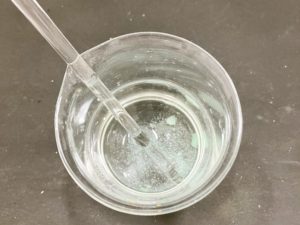
Mix 50 mL of water, 20 g of citric acid, and 1 g of iron(Ⅱ) sulfate in the specified proportions and dissolve them.
2.
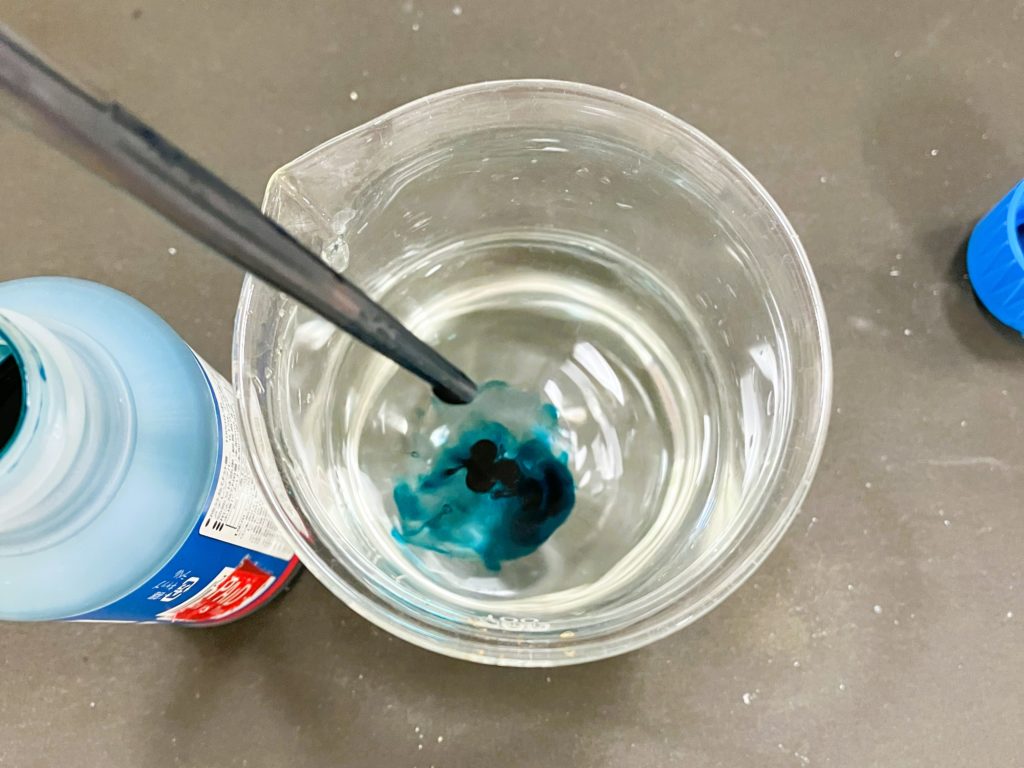
Once completely dissolved, add 1 mL of aquarium methylene blue solution.
3.
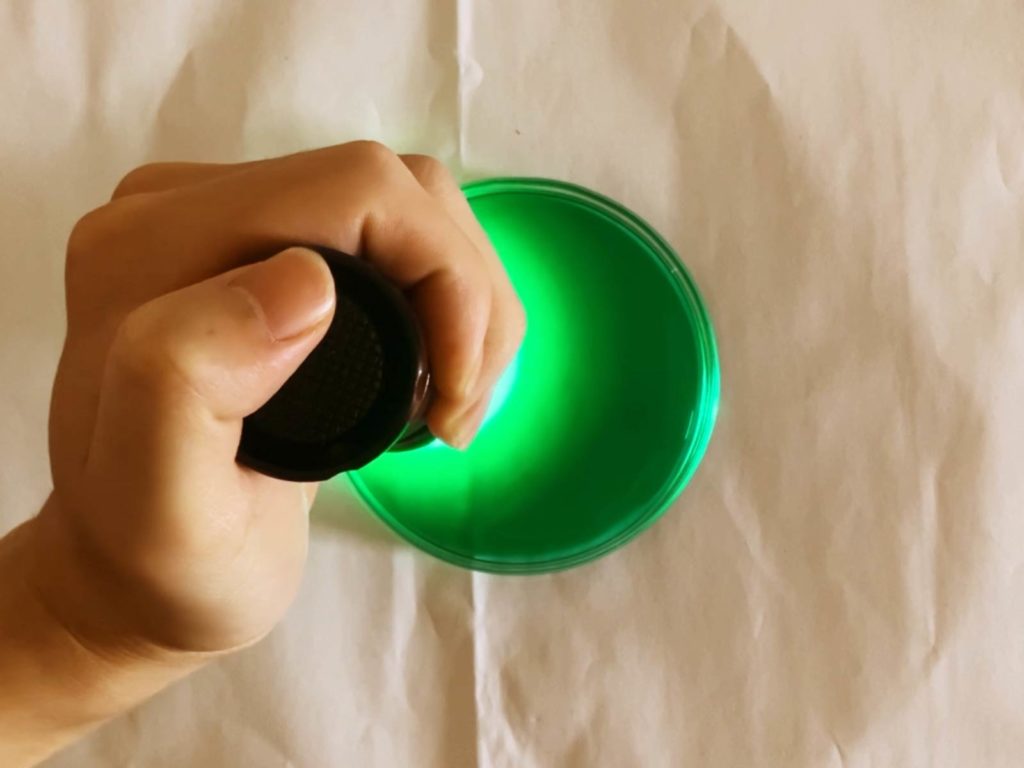
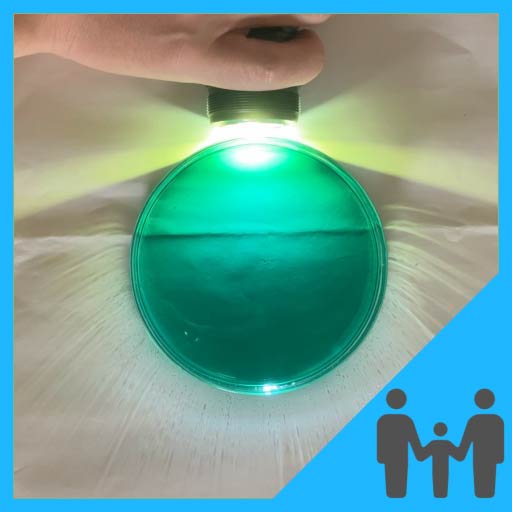
Transfer the solution to a petri dish, shine a flashlight on it for a few seconds, and then move the flashlight away.
Methods
After the experiment, dilute the solution with a large amount of water and dispose of it down the drain, or soak it up with paper towels and dispose of it as burnable trash.
Principle
In one sentence, this experiment can be described as “The structural change of methylene blue using light energy.”
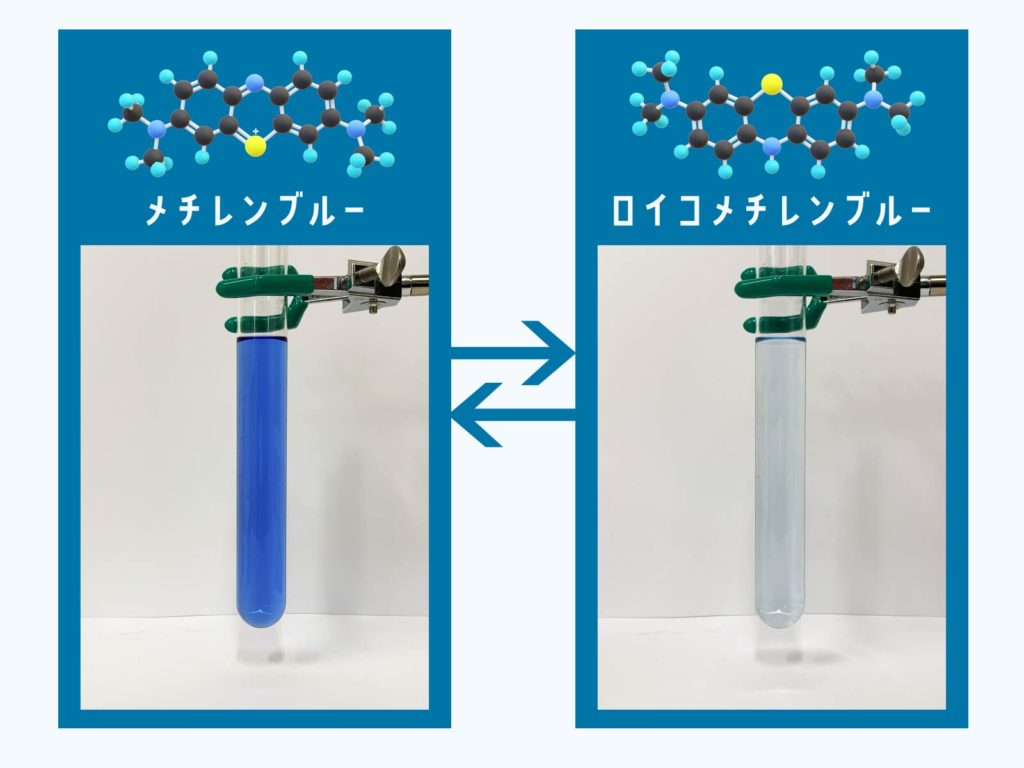
Methylene blue is typically blue in color, but when it undergoes a chemical change, it transforms into a colorless compound called “leucomethylene blue” (a detailed explanation of the chemical change is quite complex, so it will be omitted).
Additionally, when leucomethylene blue comes into contact with air, it reverts back to methylene blue. This allows the chemical change to repeat, causing the alternation between methylene blue and leucomethylene blue, resulting in the transition from blue to colorless. (For aquarium methylene blue, the appearance may vary due to other pigments.)
However, this chemical change cannot occur on its own with methylene blue. A “catalyst” is needed to make the chemical change more likely. The catalyst used in this case is the Fe²⁺ ion, which is formed when iron(Ⅱ) sulfate is dissolved in water.
The flashlight’s light, or light energy, is being used. Methylene blue absorbs the light energy and, with the help of Fe²⁺ ions in the same solution, transforms into leucomethylene blue.
This reaction also occurs with room light or sunlight, but since the transformation of leucomethylene blue back into methylene blue is happening simultaneously, it may appear that no change is occurring. However, when the strong light from a flashlight is applied, the transformation from methylene blue to leucomethylene blue becomes more frequent.