

HOME>Experiments>For Kitchen>EH005 Combustion of Steel Wool
When a battery is applied to steel wool, an orange glow accompanied by heat spreads along the iron fibers.
This experiment does not use an open flame, but the steel wool becomes extremely hot while reacting. Be careful to avoid burns.
Requires
equipments
・heat-resistant container (e.g. Pyrex)
・9V battery
・scale
reagents
・steel wool
Methods
1.
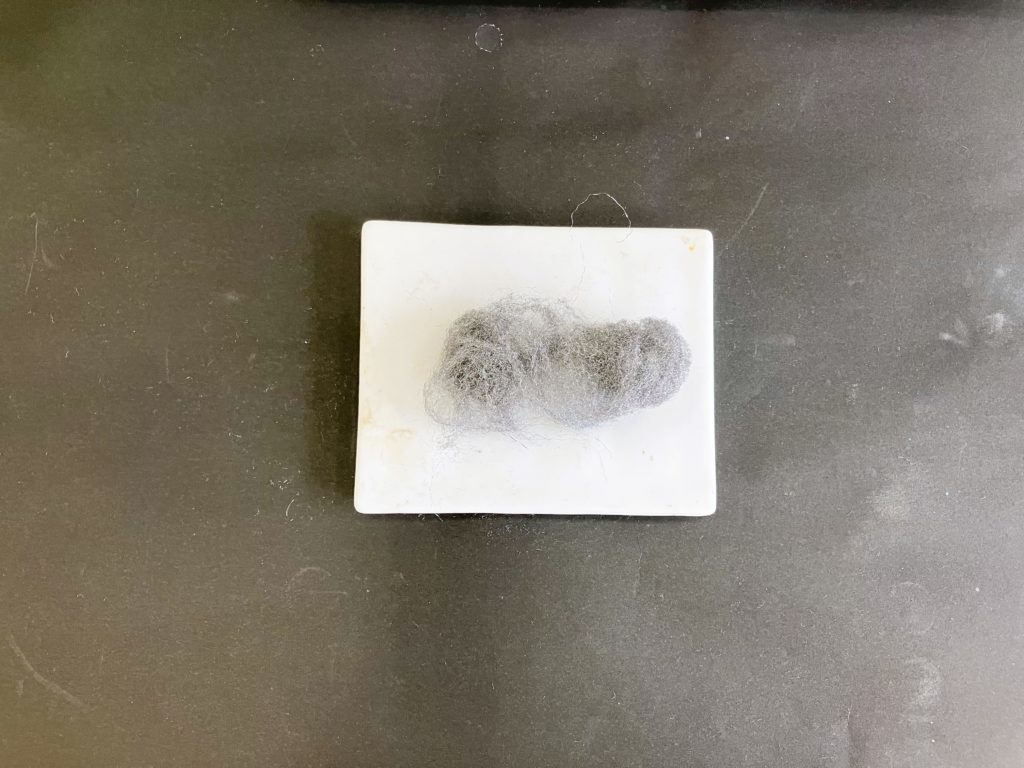
Take an appropriate amount of steel wool and fluff it out thoroughly.
2.
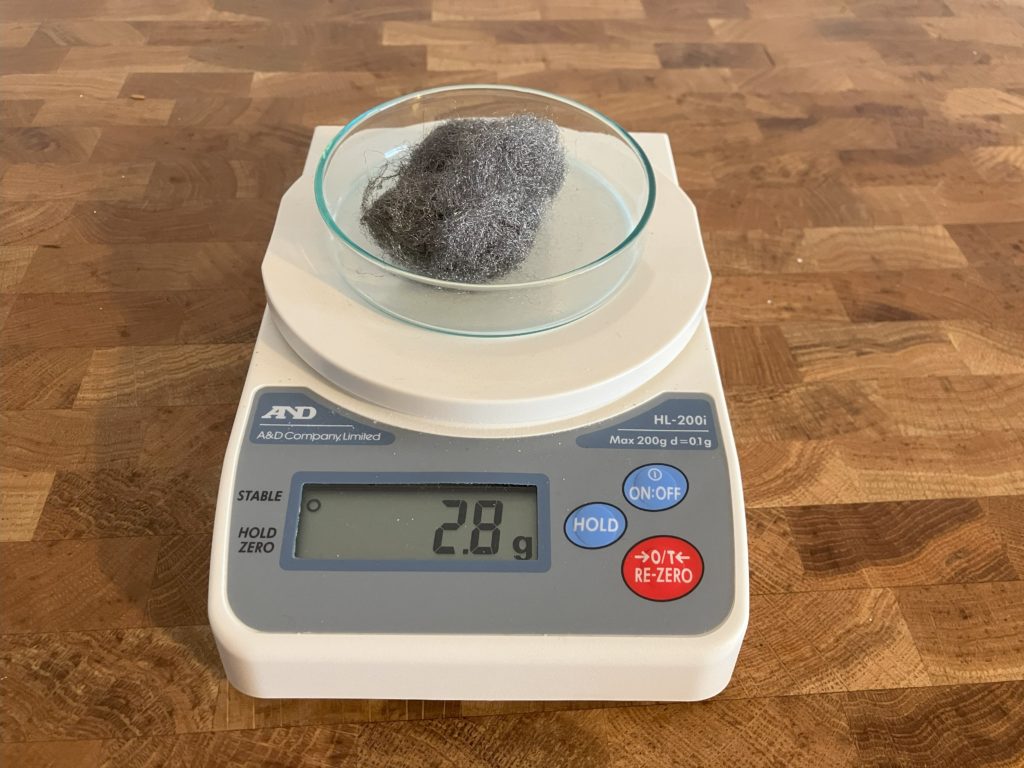
Record the weight and appearance of the steel wool you have taken out. *It is preferable if the weight can be measured to the nearest 0.1 g.
3.
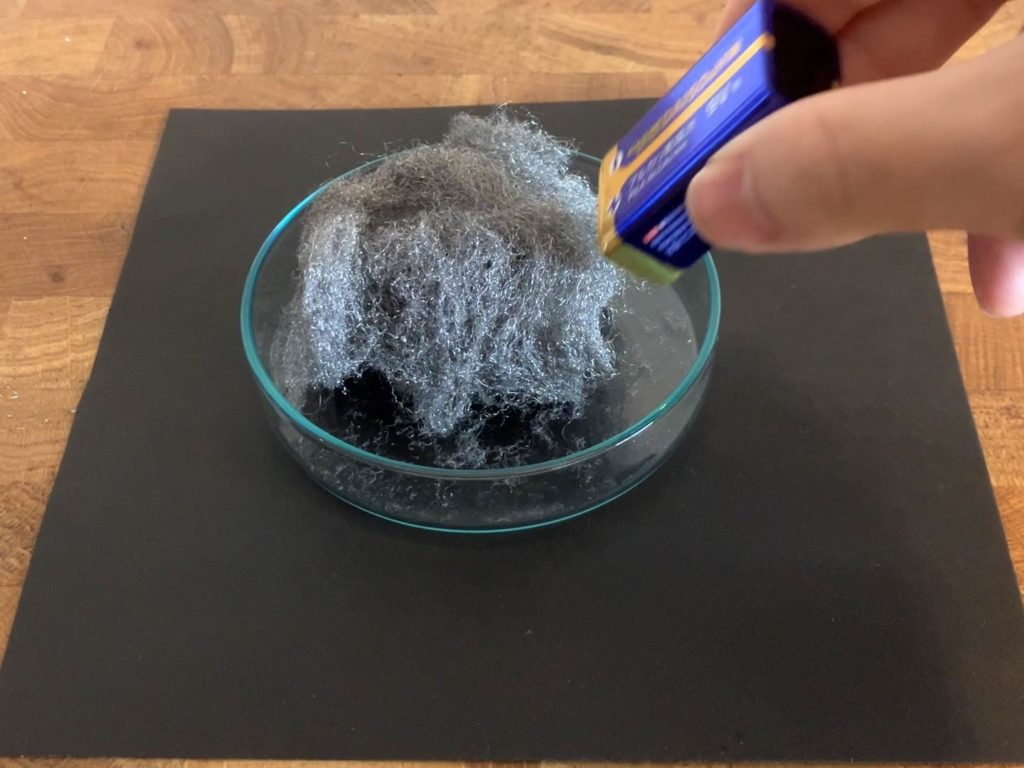
Place the steel wool on a heat-resistant dish and touch the protruding terminals of a 9V battery to it. This will ignite the steel wool and start the combustion.
3.
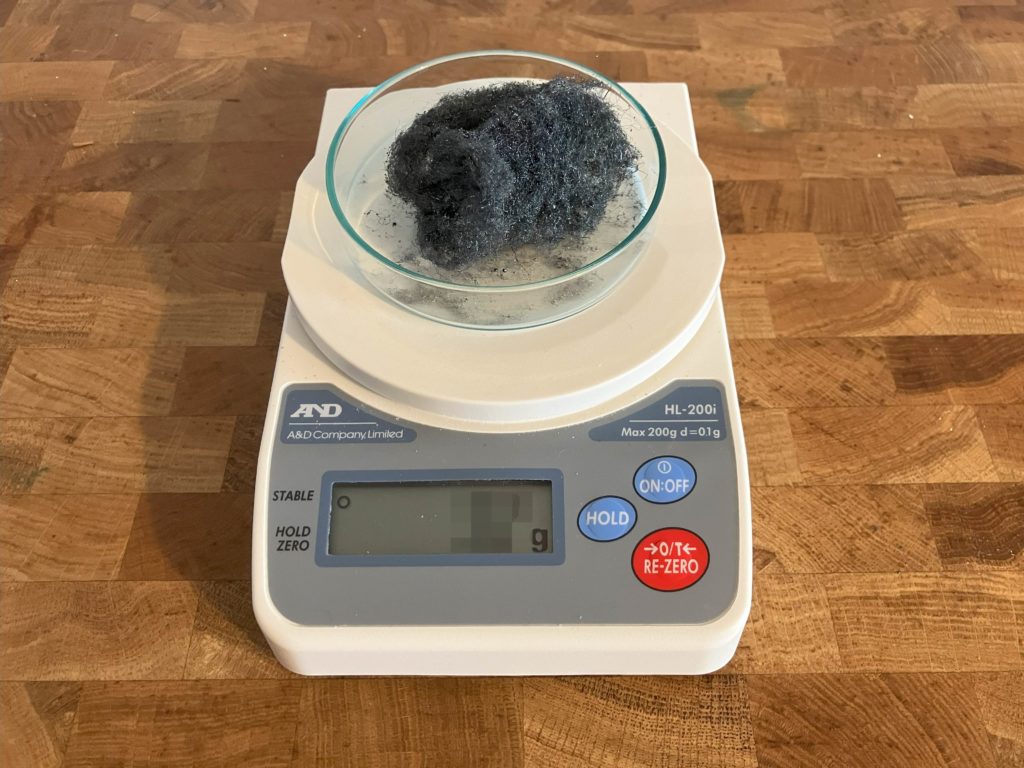
Once the steel wool has finished burning and has cooled down completely, measure its weight and observe its texture and appearance.
Clearing
The steel wool remains hot immediately after burning, so let it sit for a while before disposing of it.
When storing the used battery or placing it back into an electronic device, ensure that no steel wool fragments are attached to the battery terminals.
Principle
When a 9V battery is brought into contact with steel wool, the fine strands of the steel wool act as short circuits. As a result, the sparks generated by the short circuit ignite the steel wool, causing it to burn.
When iron burns, it reacts with oxygen in the air to form iron oxide. If the combustion stops midway, it is likely because the oxygen around the steel wool has been depleted.
Therefore, by blowing air onto the steel wool using a straw or another method to supply more oxygen during combustion, you can make it burn for a longer period.
Now, you may have noticed that the steel wool became heavier after burning in the final experiment step. Also, organic materials like wood and paper turn into ash when burned, and this ash is lighter than the original material. Why is there a difference in the change in weight between iron and organic materials?