
HOME>Experiments>For Kitchen>EH003 Color Change of Shiso
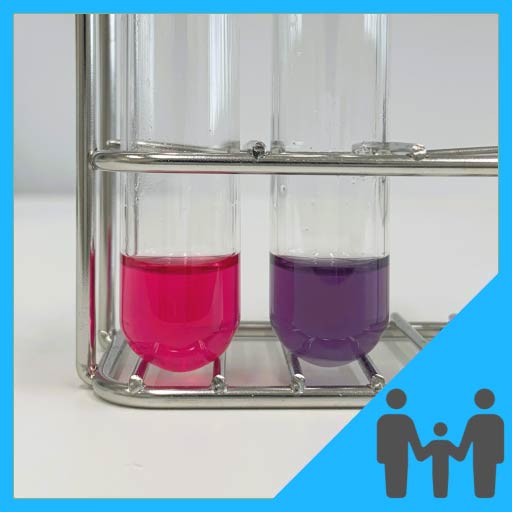
The anthocyanin pigment found in perilla (shiso) changes color depending on the pH of the solution. Let’s try using perilla flakes to test this.
This experiment uses boiling water. Be careful not to burn yourself.
Perilla (shiso) contains a substance called “anthocyanin,” which is responsible for turning ume (plum) into a bright red color when pickled together. This is a natural food dye. Other foods that contain anthocyanin include grapes, purple sweet potatoes, and purple cabbage. It is known that anthocyanin changes color depending on the pH of the solution. Let’s extract anthocyanin from perilla flakes and observe how the color changes.
Requires
equipments
・filters for tea packs
・glass
・Small cup(s)
reagents
・Perilla powder (if not, plant powder containing anthocyanins)
・baking soda
・citric acid
Methods
1.
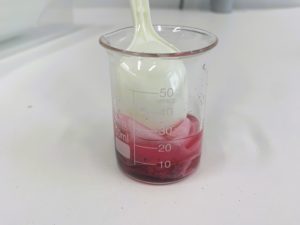
Place your desired amount of perilla flakes into a tea bag filter and soak it in hot water.
2.
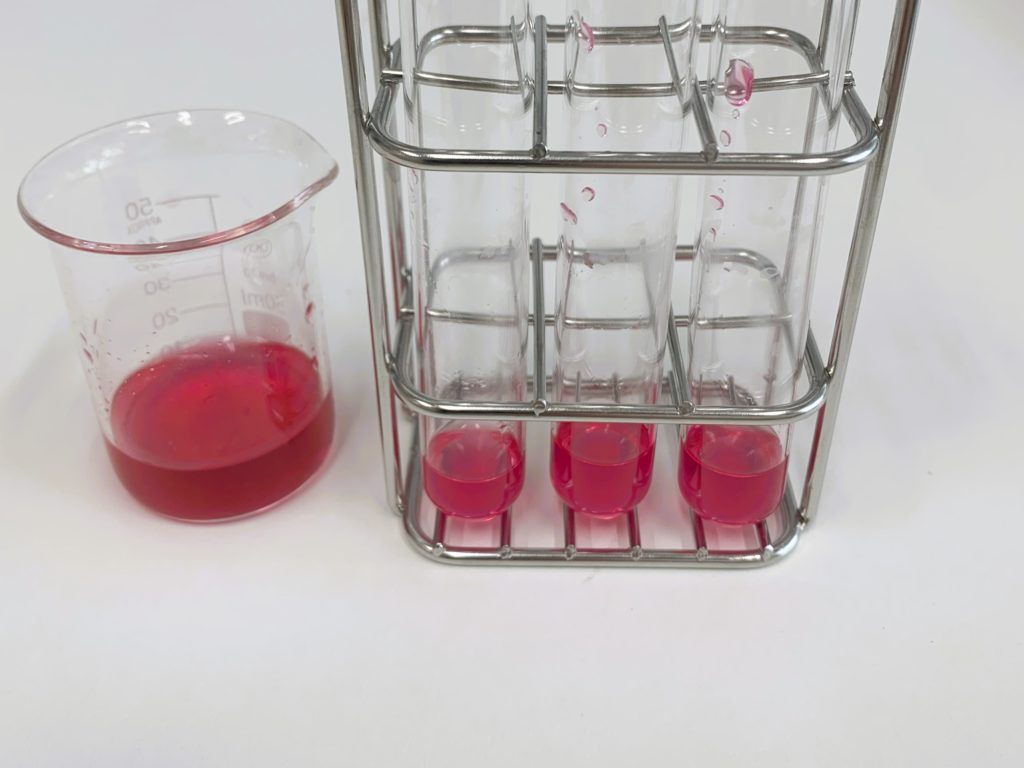
After about 5 minutes, remove the tea bag and pour small amounts into a cup.
3.
Take note of the initial color of the liquid, then add baking soda or citric acid and observe the color change. You can also try using other substances like ash or vinegar to see if they cause a color change.
Clearing
Dispose of all the liquid used in the experiment down the drain. The tea bag with the perilla flakes should be disposed of as combustible waste.
If you use substances other than baking soda and citric acid, make sure to check the proper disposal methods for each and dispose of them appropriately.
Principle
Anthocyanins are a type of pigment found in plants, and it is said that red perilla (shiso) contains 12 different types of anthocyanins. Among them, the most abundant are shisonin and malonylshisonin.
Since different plants contain different types of anthocyanins, the way they change color in response to pH also varies. It would be interesting to extract anthocyanins from other plants and compare how their colors change under different pH conditions.