
HOME>Experiments>For Kitchen>EH015 Supercooling Without a Refrigerator
Supercooling experiments often use water, but they can be quite tricky and prone to failure. Instead, let’s try using a sodium thiosulfate, which doesn’t require a freezer. This can provide a more controlled way to demonstrate the phenomenon of supercooling.
Requires
equipments
・heat-resistant container
・small pot
・thermometer
reagents
・sodium thiosulfate crystal
Methods
1.
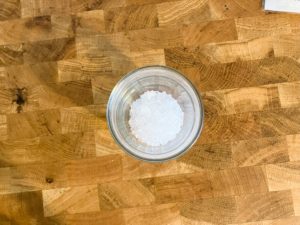
Place your desired amount of sodium thiosulfate into a heat-resistant container.
2.
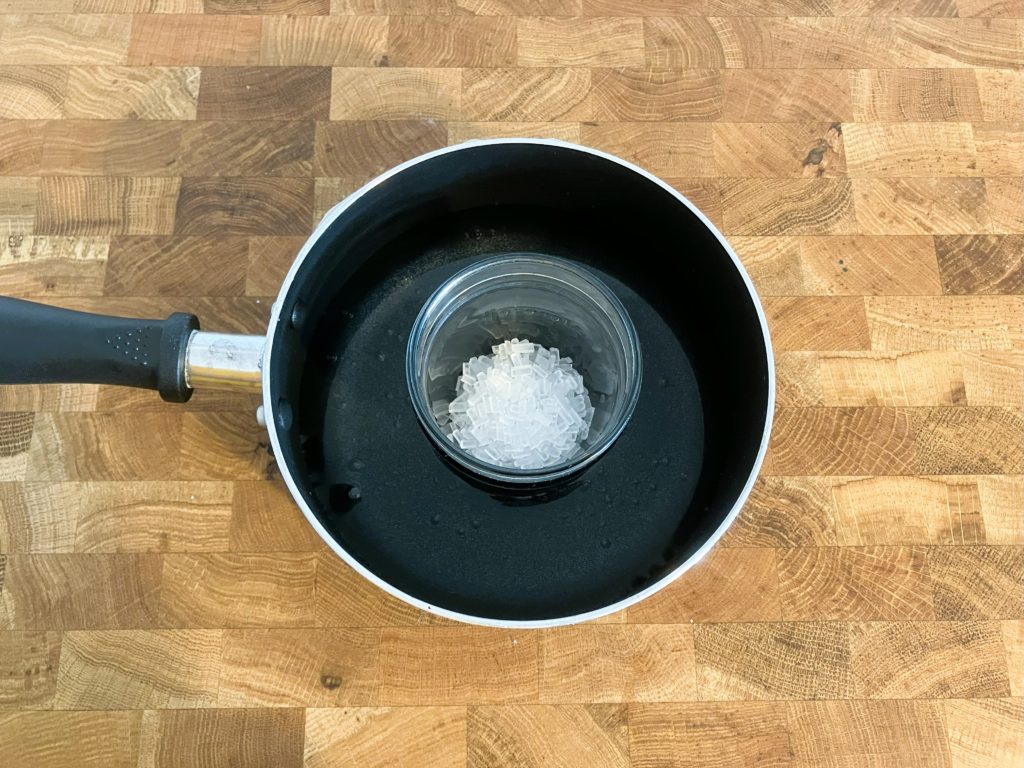
Fill a small pot with water and place the heat-resistant container in it to heat.
3.

Continue heating until the sodium thiosulfate dissolves completely. Once it has turned into a liquid, stop heating and leave it as is to cool down.
4.
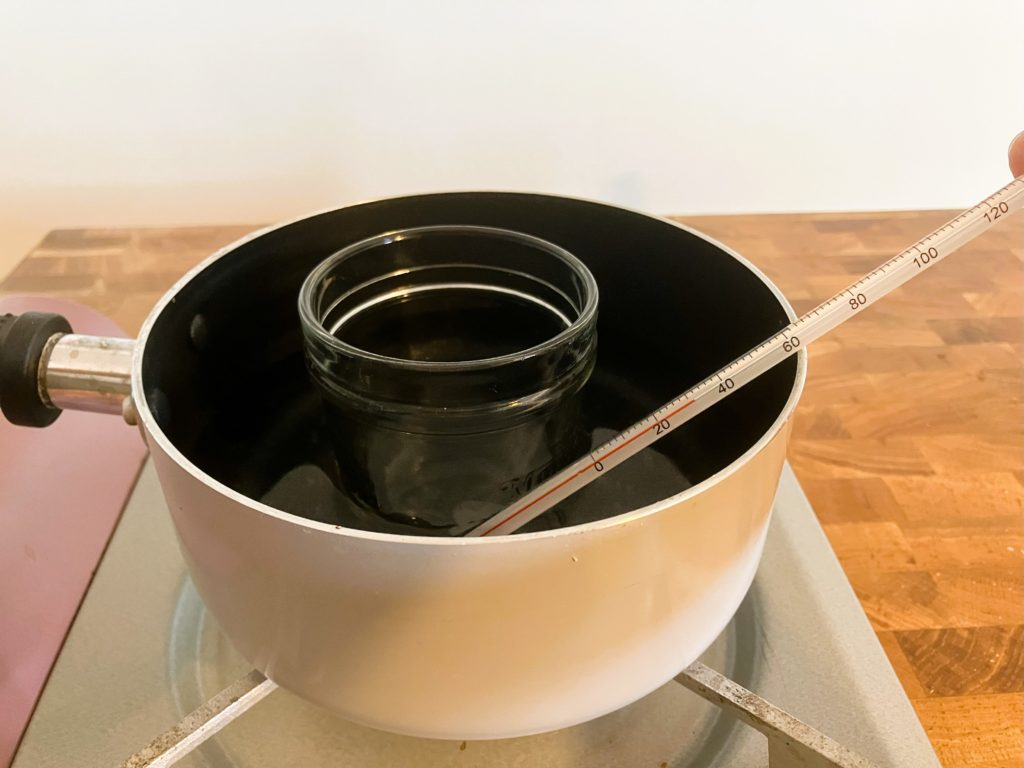
Use a thermometer to measure the water temperature and wait until it falls below 40°C.
5.
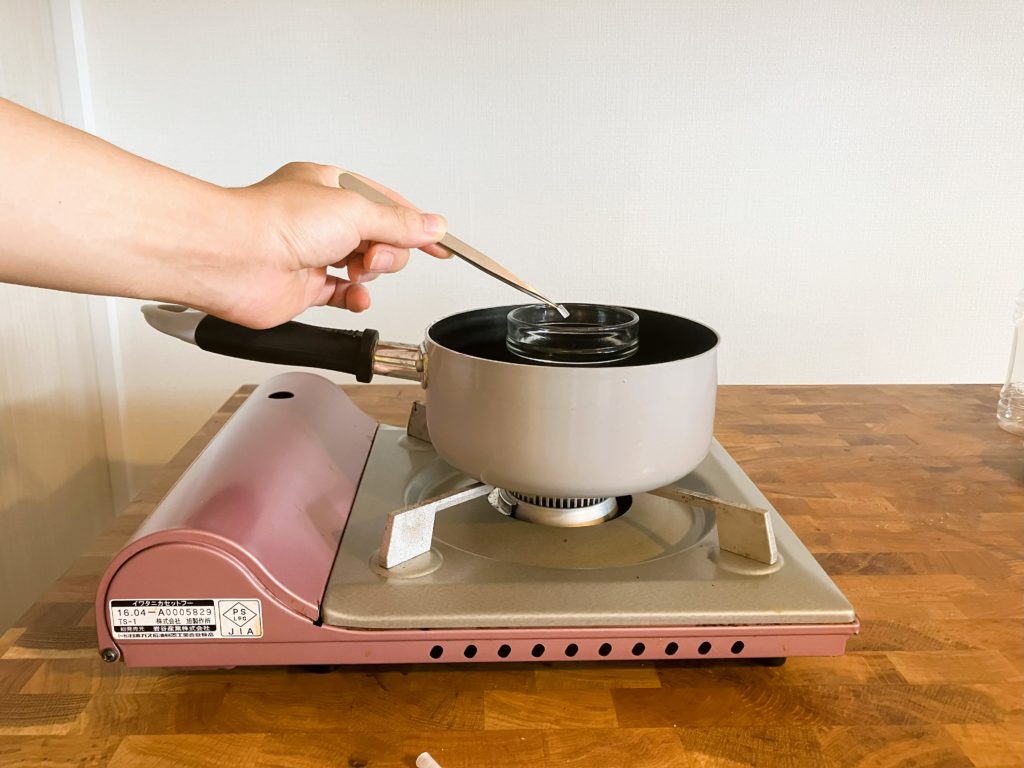
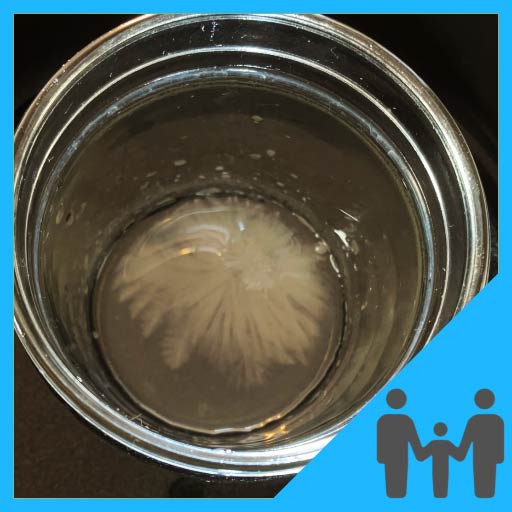
Take a single crystal of sodium thiosulfate from the bag and drop it into the liquid. Observe the changes in the liquid as you add the crystal.
Clearing
Since solidified sodium thiosulfate can be difficult to remove, you can warm it with hot water to liquefy it, then dilute it with a large amount of water and pour it down the drain. If you’re concerned about wasting water, you can pour the liquid sodium thiosulfate into a plastic bag, let it solidify, and dispose of the bag as burnable waste.
Principle
Supercooling refers to the phenomenon where a liquid remains in a liquid state even at a temperature below its freezing point, the temperature at which it would normally solidify.
The freezing point of sodium thiosulfate is 48°C, so after melting it with boiling water and leaving it to cool to room temperature, it reaches a supercooled state. In the case of water, supercooling is typically achieved by placing it in a freezer, but it often fails because even a slight shock when removing it from the freezer can cause it to instantly freeze. Sodium thiosulfate, on the other hand, only requires being left to cool in place, making it much less prone to failure. This is a significant advantage.