

HOME>Experiments>For Kitchen>EH001 Fruit Mummy
In ancient Egypt, a mineral called “TRONA” was used to dry the bodies during mummy making. Let’s take a look at the properties of trona using fruits.
Wear gloves during this experiment to avoid covering your hands.
Tolona, also called sodium sesqui carbonate, is represented by the chemical formula NaHCO3・Na2CO3・ 2H2O. You can often find it in the cleaning products section of a store. The sodium carbonate contained in these crystals has hygroscopic properties, and in ancient Egypt, it was used to make mummies by removing water from the bodies of dead animals and to make dried meat from livestock to preserve it as food. Let’s sprinkle this sodium sesquicarbonate on fruits and see how much water is lost.
Requires
equipments
・cooking vats or containers with lids
・sticky notes or masking tape
・scale
reagents
・favorite fruit
・sodium sesquicarbonate
Preparation
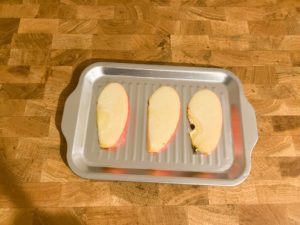
Prepare several fruit pieces by cutting the fruit into thin slices. The pieces can be cut in any way you like, but you will get more accurate results if the pieces are cut so that they are uniformly shaped.
Methods
1.
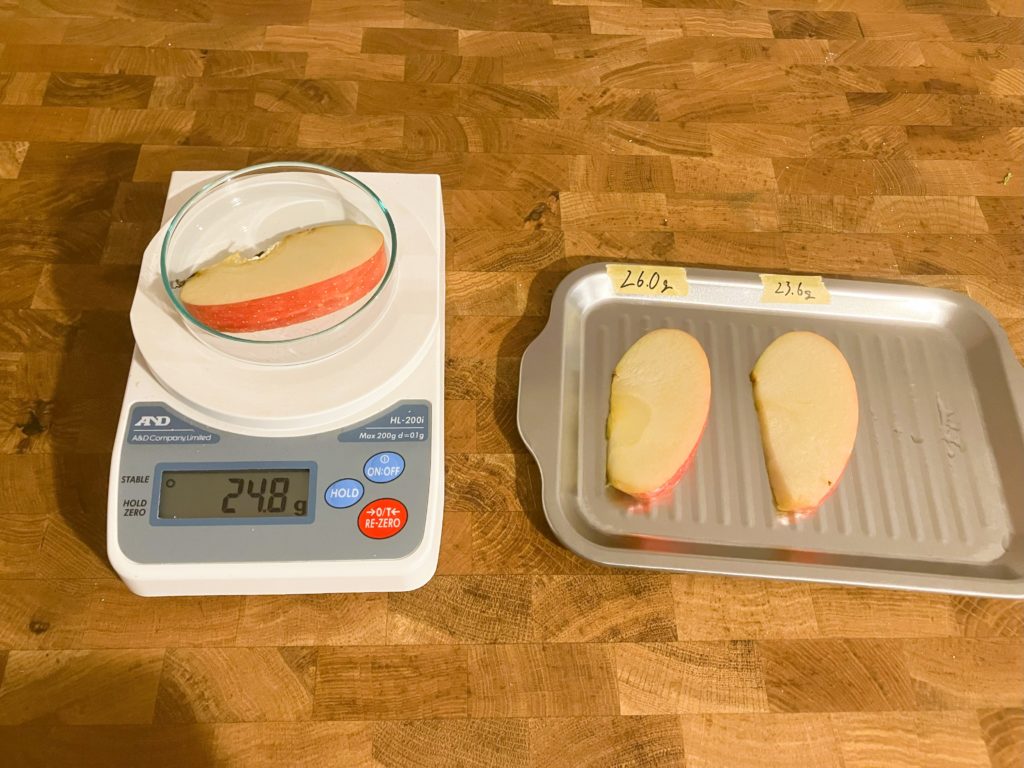
Weigh and note the weight of the cut fruit.
2.

Apply sodium carbonate evenly to the fruit. Cover with plastic wrap and wait overnight.
3.
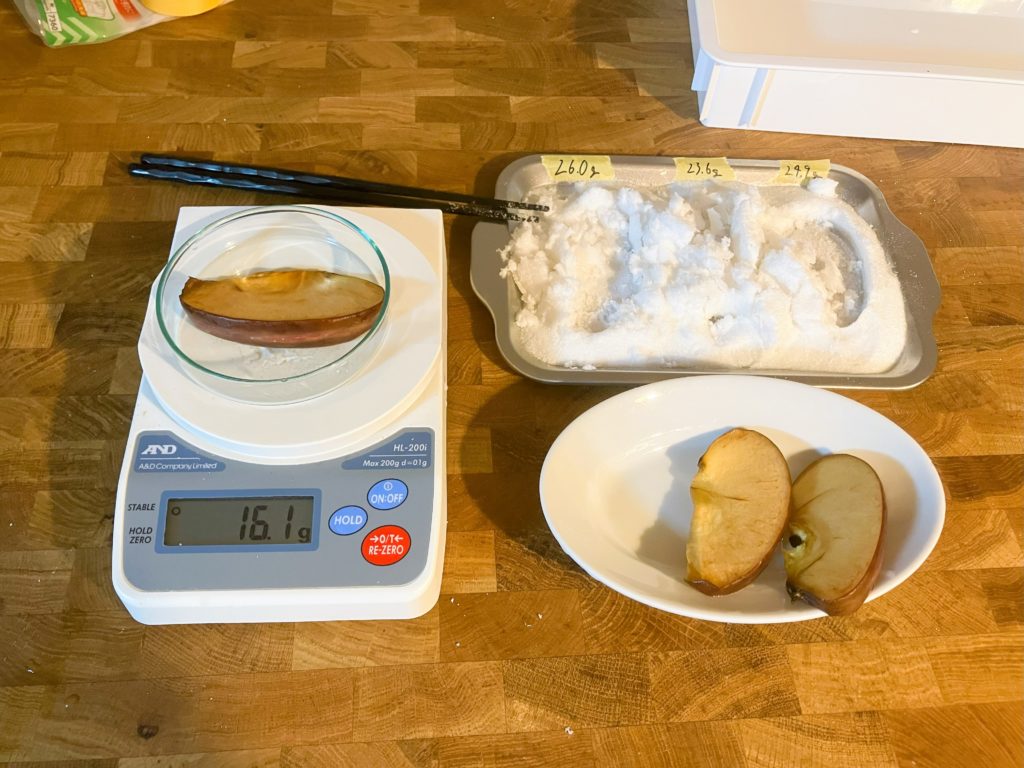
After overnight, remove the sodium carbonate from the fruit, rinse the fruit with water, and weigh the fruit with kitchen paper to determine how much water has been removed and make a graph.
Clearing
All fruits and sodium carbonate used in the experiment are bagged and disposed of as burnable trash.*Do not eat the fruits used in the experiment, as they may be rotten.
Sodium carbonate left on the dish can be lightly rinsed and washed as usual.
Principle
Sodium sesquicarbonate contains baking soda and sodium carbonate in its crystals, as shown by its composition (NaHCO3・Na2CO3・2H2O). Then, how does the water content of fruits change when only baking soda or only sodium carbonate is used?
Sodium carbonate is sold at pharmacies and on Amazon, but if you are on a budget, you can heat sodium sesquicarbonate to obtain sodium carbonate, which undergoes thermal decomposition.
2(NaHCO2・Na2CO3・2H2O) ➞ 3Na2CO3 + CO2 + 3H2O
Based on the above reaction formula and the molar mass of sodium sesquicarbonate and sodium carbonate, we can consider thermal decomposition complete when the weight is about 80% of that before heating. Similarly, sodium bicarbonate is converted to sodium carbonate by thermal decomposition.
Incidentally, in the past, sodium carbonate obtained by removing impurities from mined trona and calcining it was used as a raw material for glass.
Actually, when I was in middle school, I once mummified a piece of salmon using sodium carbonate as part of my summer research project. I remember that while the salmon mummy was perfectly dried out, it had an awful smell. I clearly recall horrifying my classmates during the presentation after summer break. Recently, I remembered that experiment and decided to try it again, this time using a beef steak.
Requires
equipments
・containers with lids×3
・sticky notes or masking tape
・scale
reagents
・sodium sesquicarbonate
・sodium carbonate(anhydrous)
・baking soda
・beef steak (with little fat)×3
Preparation
Sodium carbonate is prepared in its anhydrous form (without water molecules in the crystals). If only the hydrate form is available, it should be placed in a suitable experimental pot (one that can be heated dry) and heated over to drive off the water from the crystals, until it becomes a white, powdery, and dry state.
Methods
1.
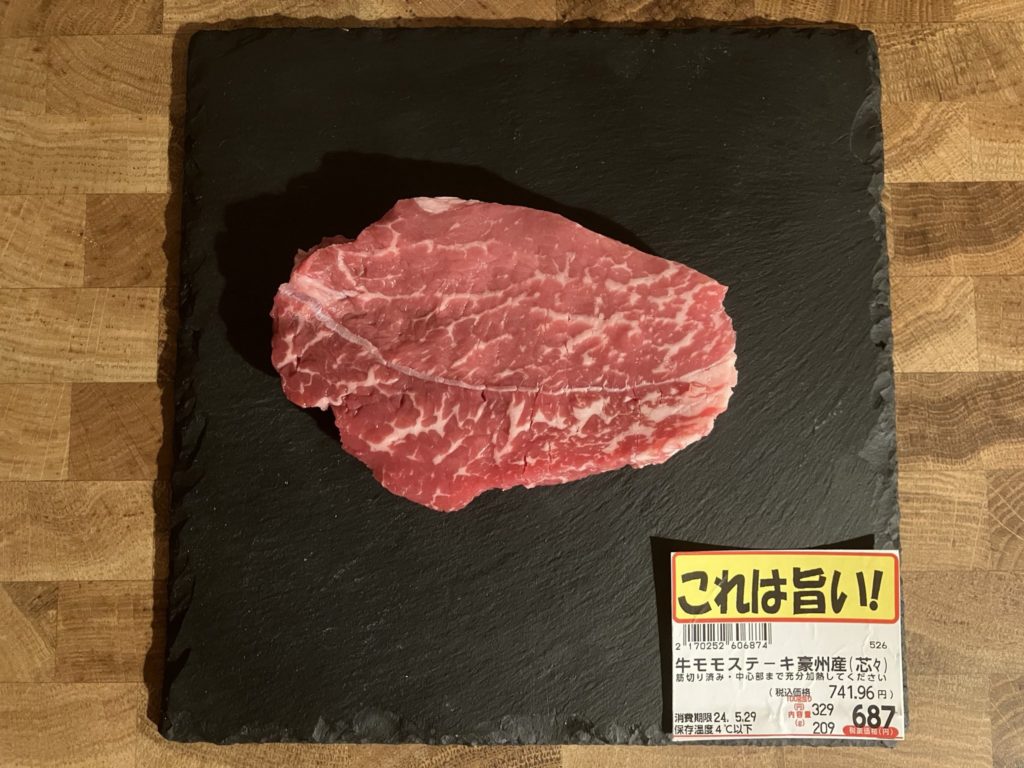
Weigh the steak and make a note of its weight.
2.

Spread 2 to 3 cm of sodium sesquicarbonate at the bottom of a container, then place the steak on top and cover it completely with sodium sesquicarbonate, ensuring there are no gaps. Do the same with baking soda and sodium carbonate.
3.
Close the container with a lid and label the type of powder using masking tape and a pen.
4.
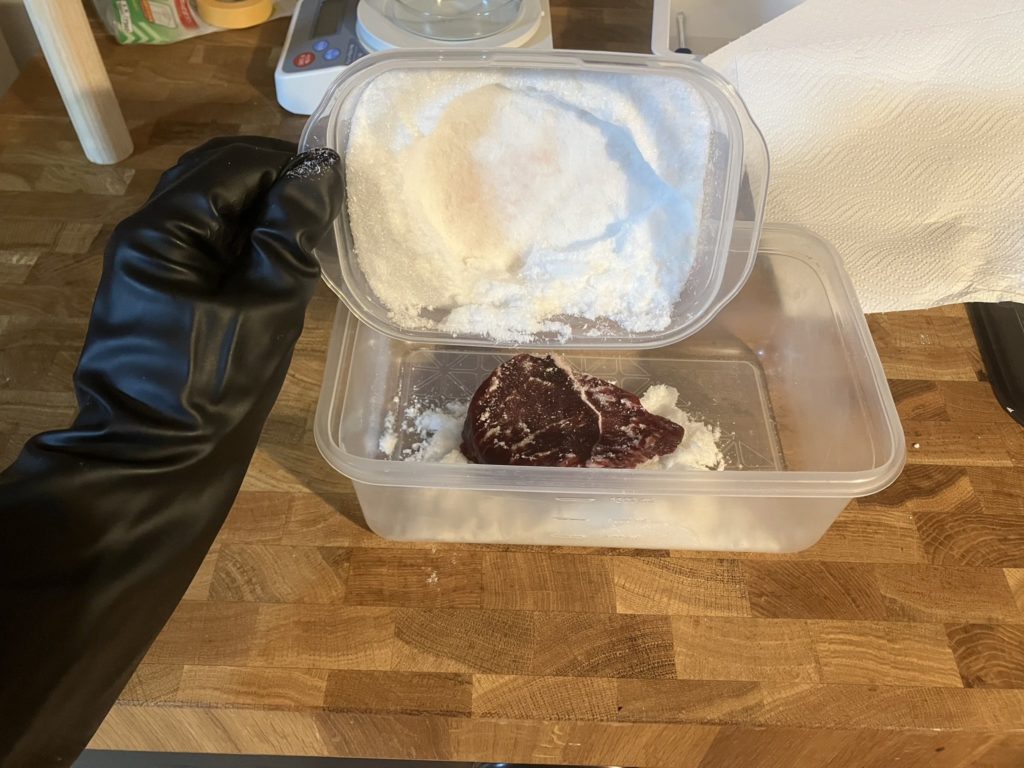
After one day, dig up the meat, rinse it with water, and gently pat it dry with kitchen paper. Then, weigh the meat. After that, bury the meat again. Repeat this process for any desired period, and observe the change in the weight of the meat each day.
Principle
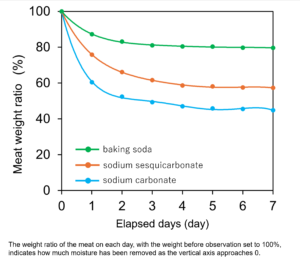
When the author conducted the experiment, the weight of the meat showed the following changes over the course of one week. The amount of weight reduction was in the order of sodium carbonate > sodium sesquicarbonate > baking soda. There was a significant change in weight during the first 1-2 days of the experiment, and after that, the weight remained relatively constant.